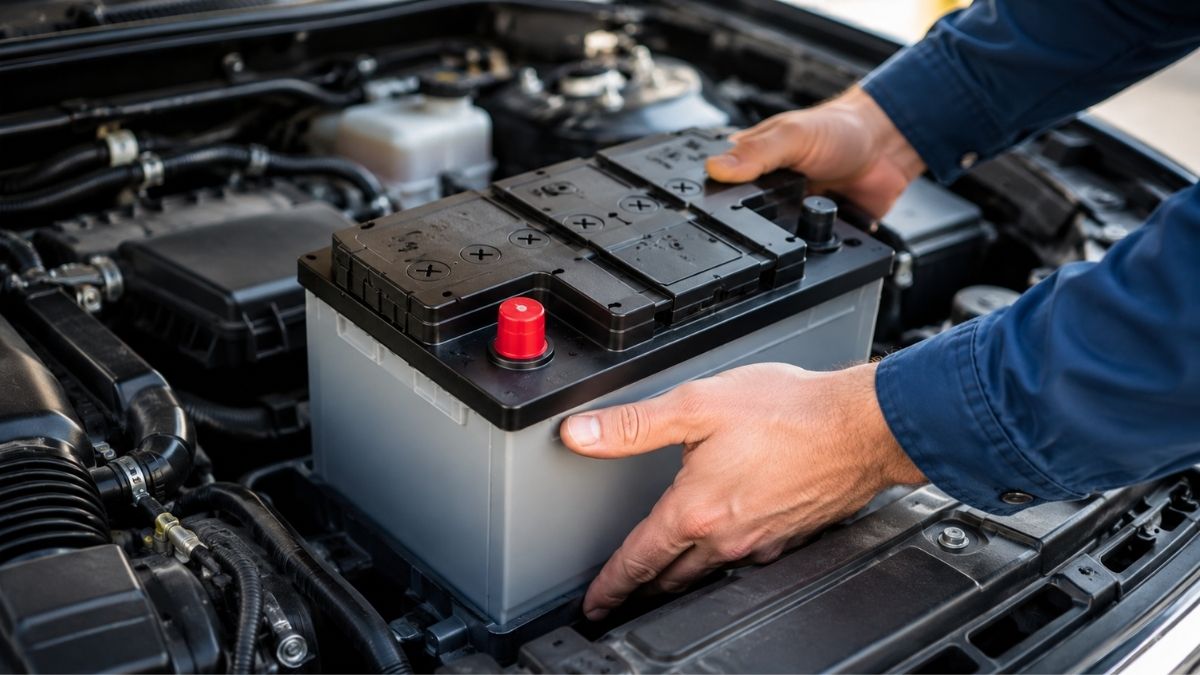
A car battery does more than start your engine. It powers your vehicle’s electronics, supports onboard systems, and helps maintain reliable performance in different weather conditions. Choosing the wrong battery can lead to weak starts, electrical issues, and shorter battery life.
Before buying a replacement, it helps to understand what your vehicle actually requires and how different battery types perform in real-world conditions.
Know Your Vehicle’s Battery Requirements
Your owner’s manual is the best place to start. It lists the exact battery specifications recommended for your vehicle. You can also check the label on your current battery for matching details.
Here are the key specifications to pay attention to:
- Battery Group Size: Determines the battery’s physical dimensions and terminal placement.
- Cold Cranking Amps (CCA): Measures starting power in cold temperatures.
- Reserve Capacity (RC): Indicates how long the battery can run essential electronics if the alternator stops working.
- Terminal Position: Ensures cables connect correctly and the battery fits securely.
Using the wrong size or power rating can create charging problems, poor starting performance, or installation issues.
Understand the Different Battery Types
Different vehicles benefit from different battery technologies. Choosing the right type depends on your .
Flooded Lead-Acid Batteries
These are the traditional batteries found in many vehicles. They are affordable, widely available, and suitable for standard daily driving.
They work well for drivers with basic electrical needs and regular commuting patterns. Maintenance requirements are generally low, making them a practical option for most drivers.
AGM (Absorbent Glass Mat) Batteries
AGM batteries offer better durability and faster charging compared to standard lead-acid batteries.
They are ideal for:
- Vehicles with start-stop systems
- Cars with advanced infotainment features
- Drivers using multiple electronic accessories
- Areas with rough roads or frequent vibration
Although AGM batteries cost more upfront, they often last longer and deliver more consistent performance.
Lithium-Ion Batteries
Lithium-ion batteries are typically found in high-performance or specialty vehicles. They are lightweight and capable of delivering strong output.
However, they remain expensive and are not commonly required for standard passenger vehicles.
Choose the Right Cold Cranking Amps (CCA)
CCA becomes especially important in colder climates where battery performance naturally drops.
Higher CCA ratings provide stronger starting power during freezing temperatures. Vehicles in warmer regions can usually operate with standard CCA levels.
Never install a battery with lower CCA than the manufacturer recommends. Reduced cranking power can cause difficult starts and added strain on the electrical system during cold weather.
Check Battery Age Before Buying
Battery age matters even before installation. Batteries slowly lose strength while sitting in storage.
Before purchasing:
- Check the manufacturing date sticker
- Choose a battery less than six months old when possible
- Avoid older inventory that may already have reduced capacity
A newer battery typically delivers better lifespan and reliability.
Consider Your Driving Habits
Driving patterns directly affect battery health and charging performance.
You may need a stronger or more advanced battery if you:
- Frequently drive short distances
- Use multiple electronic accessories
- Live in extremely hot or cold climates
- Rely heavily on infotainment or comfort systems
Short trips often prevent the alternator from fully recharging the battery. In these cases, AGM batteries can provide better long-term performance.
Signs You Need a New Battery
Several warning signs indicate your current battery may be nearing the end of its lifespan.
Watch for:
- Slow engine cranking
- Dim headlights
- Clicking sounds when starting
- Dashboard battery warning lights
- Corrosion around terminals
- Battery age exceeding three to five years
Replacing a weak battery early helps prevent unexpected breakdowns and protects your vehicle’s electronics.
Warranty Coverage Matters
Battery warranties vary between manufacturers and can provide valuable long-term protection.
Before purchasing, compare:
- Free replacement periods
- Prorated coverage terms
- Nationwide warranty support
Longer warranties often reflect better build quality and stronger manufacturer confidence.
A Better Battery Choice Starts With the Right Match
The best car battery is the one that matches your vehicle’s exact specifications and your real driving conditions. Climate, daily driving habits, and onboard electronics all influence battery performance over time.
Investing in the right battery can improve reliability, reduce electrical problems, and provide more confidence every time you start your vehicle.