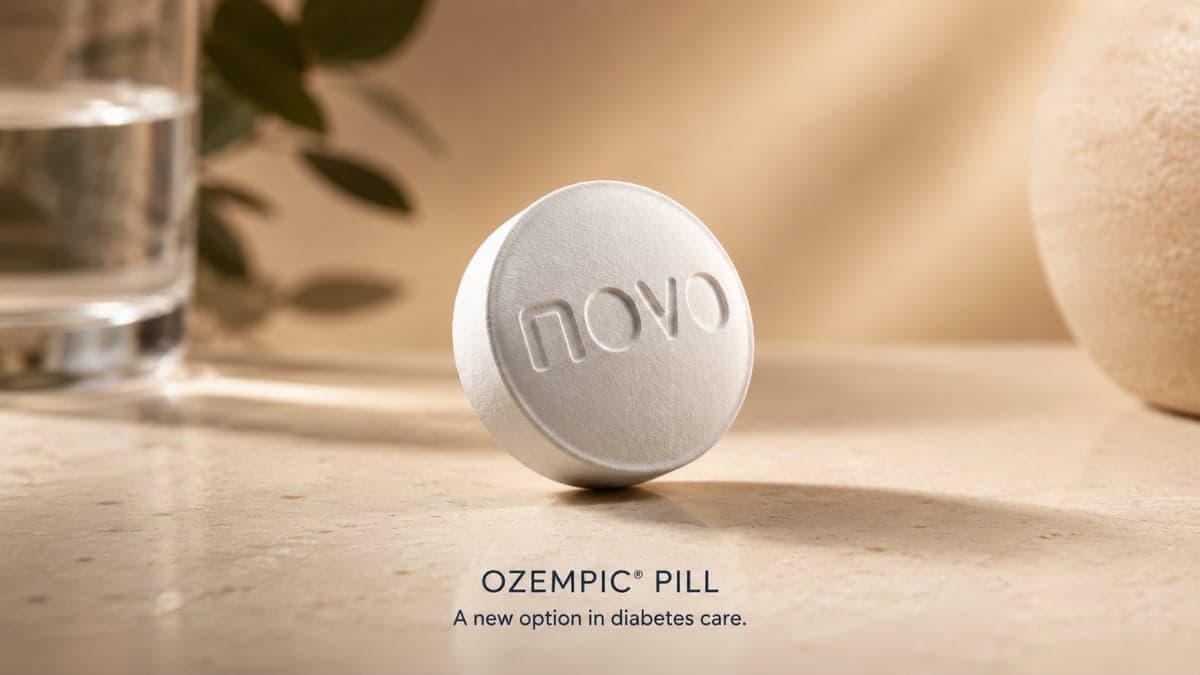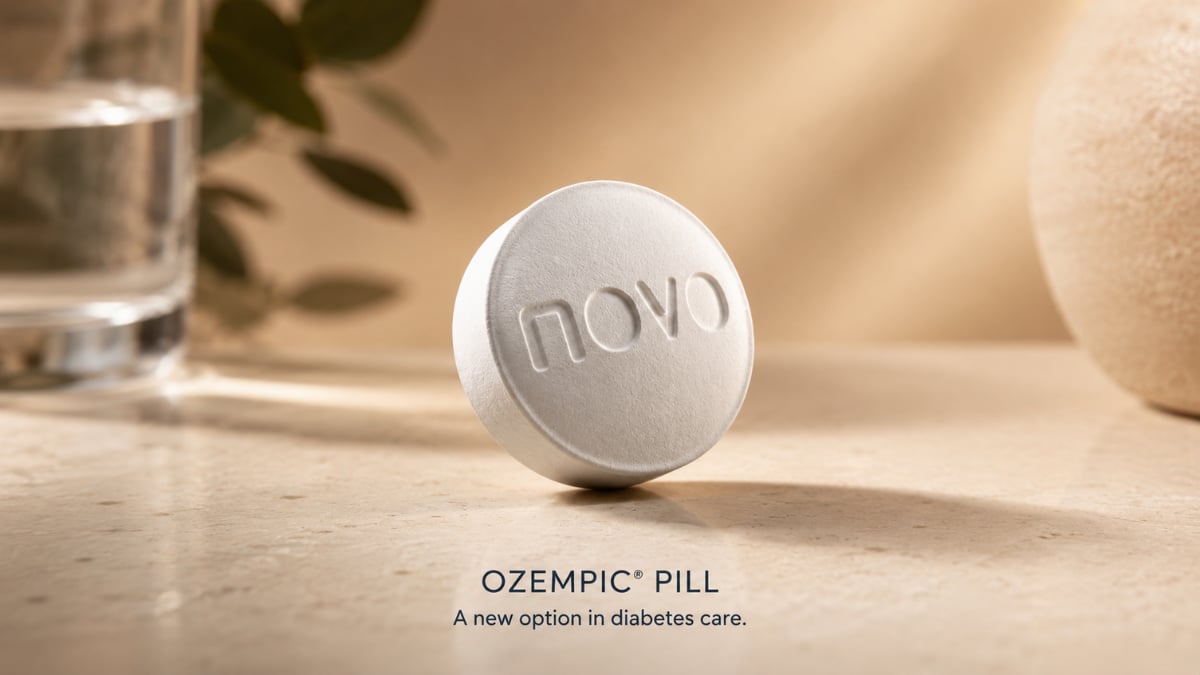
The Ozempic® pill is a prescription form of oral semaglutide used alongside diet and exercise to improve blood sugar control in adults with type 2 diabetes.
It is also approved to reduce the risk of major cardiovascular events—such as heart attack, stroke, or cardiovascular death—in adults with type 2 diabetes who are at high risk for these events.
The tablet offers an alternative for eligible patients who prefer an oral medicine over a weekly injection.
However, it has specific administration instructions, possible side effects, and serious safety warnings that patients should discuss with a licensed healthcare professional.
What Is the Ozempic Pill?
Ozempic tablets contain semaglutide, a medication belonging to a class called glucagon-like peptide-1 receptor agonists, or GLP-1 receptor agonists.
Semaglutide works in several ways. It can:
- Help the pancreas release insulin when blood sugar is elevated
- Reduce the amount of glucose released by the liver
- Slow the movement of food through the stomach
- Promote a feeling of fullness after eating
Ozempic was originally widely known as a once-weekly injection. In 2026, the U.S. Food and Drug Administration approved updated labeling introducing Ozempic-branded semaglutide tablets.
The oral and injectable versions contain the same active ingredient, but they have different strengths, dosing schedules, and administration requirements.
What Is the Ozempic Pill Used For?
According to the FDA-approved prescribing information, Ozempic tablets are used:
- Alongside diet and exercise to improve blood sugar control in adults with type 2 diabetes.
- To reduce the risk of major cardiovascular events in adults with type 2 diabetes who are at high risk for these events.
Ozempic tablets are prescription medicines. Their safety and effectiveness in children have not been established.
Although semaglutide may affect appetite and body weight, Ozempic tablets should not automatically be considered a weight-loss medication.
Patients interested in medical weight management should speak with a healthcare professional about treatments specifically approved for that purpose.
Is the Ozempic Pill the Same as Rybelsus®?
Ozempic tablets and Rybelsus tablets both contain oral semaglutide. However, they are available in different strengths:
| Medication | Available tablet strengths |
|---|---|
| Ozempic tablets | 1.5 mg, 4 mg, and 9 mg |
| Rybelsus tablets | 3 mg, 7 mg, and 14 mg |
These products are not interchangeable milligram for milligram. Patients should never switch between them, change their dose, or substitute one product for another unless instructed by their prescriber.
The FDA’s 2026 approval documentation explains that the Ozempic tablet name was introduced for a newer oral semaglutide formulation previously associated with Rybelsus development.
Ozempic Pill vs. Ozempic Injection
The Ozempic pill and injection both contain semaglutide, but they are not used in the same way.
| Feature | Ozempic pill | Ozempic injection |
| Form | Oral tablet | Subcutaneous injection |
| Frequency | Once daily | Once weekly |
| Administration | On an empty stomach with water | Injected under the skin |
| Strengths | 1.5 mg, 4 mg, and 9 mg | Strengths listed for injection pens |
| Switching | Requires prescriber guidance | Requires prescriber guidance |
Patients should not convert an injectable dose into a tablet dose themselves.
Switching formulations requires a clinician to consider the current dose, treatment response, timing, side effects, and other health factors.
How Do You Take the Ozempic Pill?
The FDA-approved instructions state that Ozempic tablets should be taken:
- Once daily in the morning
- On an empty stomach
- With no more than four ounces of plain water
- Without food, other drinks, or oral medicines
- At least 30 minutes before eating, drinking, or taking another oral medication
The tablet must be swallowed whole. It should not be split, crushed, chewed, or dissolved.
If a dose is missed, the prescribing information advises skipping it and taking the next dose the following day. Patients should not take more than one tablet per day.
Following these instructions matters because food, beverages, and other medicines can affect how much semaglutide the body absorbs.
What Is the Typical Ozempic Tablet Dosage?
The FDA-approved dosage schedule begins with 1.5 mg once daily for the first 30 days. This starting dose is intended to help the body adjust and is not considered effective for blood sugar control.
The labeled schedule then increases to 4 mg once daily from days 31 through 60. On or after day 61, a prescriber may maintain the 4 mg dose or increase it to 9 mg once daily if additional blood sugar control is needed.
What Are the Most Common Side Effects?
Semaglutide commonly causes gastrointestinal side effects, especially when treatment begins or the dose increases. These may include:
- Nausea
- Abdominal pain
- Diarrhea
- Reduced appetite
- Vomiting
- Constipation
Some symptoms may improve as the body becomes accustomed to the medication. Persistent, severe, or concerning symptoms should be reported to a healthcare professional.
What Are the Serious Risks?
Ozempic tablets may cause serious side effects. Important warnings include:
Possible thyroid tumors
Semaglutide caused thyroid C-cell tumors in studies involving rodents. It is unknown whether it causes these tumors, including medullary thyroid carcinoma, in humans.
Ozempic tablets should not be used by people with:
- A personal or family history of medullary thyroid carcinoma
- Multiple Endocrine Neoplasia syndrome type 2, or MEN 2
Patients should seek medical advice if they develop a neck lump or swelling, persistent hoarseness, difficulty swallowing, or shortness of breath.
Pancreatitis
Inflammation of the pancreas has been reported with GLP-1 medicines. Severe and persistent abdominal pain—sometimes extending to the back and possibly accompanied by vomiting—requires prompt medical attention.
Low blood sugar
The risk of hypoglycemia may increase when Ozempic tablets are combined with insulin or medicines that stimulate insulin release. A clinician may need to adjust the doses of these medications.
Kidney problems caused by dehydration
Vomiting, nausea, or diarrhea can lead to dehydration and may worsen kidney function. Patients should contact a healthcare professional if gastrointestinal symptoms are severe or do not resolve.
Diabetic eye complications
People with diabetic retinopathy may require closer monitoring, particularly when blood sugar levels improve quickly. Any new or worsening vision changes should be reported promptly.
Gallbladder problems
Semaglutide has been associated with gallstones and gallbladder inflammation. Symptoms can include upper abdominal pain, fever, yellowing of the skin or eyes, or pale-colored stools.
Serious allergic reactions
Urgent medical care may be necessary for swelling of the face, lips, tongue, or throat; severe rash or itching; difficulty breathing; fainting; or a very rapid heartbeat.
Severe stomach problems
Ozempic tablets can cause severe gastrointestinal reactions and are not recommended for patients with severe gastroparesis.
Who Should Talk to a Doctor Before Taking Ozempic Tablets?
Before beginning treatment, patients should tell their healthcare provider if they:
- Have had pancreatic or kidney problems
- Have diabetic retinopathy or other diabetes-related vision problems
- Have severe digestive problems or gastroparesis
- Take insulin or another blood-sugar-lowering medicine
- Are scheduled for surgery, anesthesia, or deep sedation
- Are pregnant, planning pregnancy, or breastfeeding
- Take prescription medicines, over-the-counter products, vitamins, or herbal supplements
The FDA medication guide advises stopping Ozempic tablets at least two months before a planned pregnancy.
Breastfeeding is not recommended during treatment. Patients should consult their clinician before stopping any prescribed medicine.
Can You Buy an Ozempic Pill Online?
Consumers should be cautious of websites advertising nonprescription “Ozempic pills,” unapproved generic Ozempic, or products described as natural alternatives.
These products may be counterfeit, improperly compounded, mislabeled, or contain ingredients that have not been evaluated for safety and effectiveness.
Do not purchase or take a product simply because it uses terms such as “semaglutide pill,” “oral GLP-1,” or “Ozempic alternative.” Confirm the exact product, manufacturer, active ingredient, and dispensing pharmacy with a qualified healthcare professional.
Frequently Asked Questions
Is Ozempic available as a pill?
Yes. Current FDA prescribing information includes Ozempic-branded semaglutide tablets for oral use in adults with type 2 diabetes.
Is the Ozempic pill approved for weight loss?
Its labeled uses focus on type 2 diabetes and reducing cardiovascular risk in certain adults with type 2 diabetes. It should not be promoted or used as an approved weight-loss treatment unless the applicable product label specifically supports that use.
Do Ozempic tablets work like the injection?
Both forms contain semaglutide and activate GLP-1 receptors, but they have different doses, schedules, and administration requirements. Individual results may also differ.
Can I switch from Ozempic injections to pills?
Switching may be possible for certain patients, but it must be planned by a healthcare professional. The products are not interchangeable dose for dose.
Can I take an Ozempic pill with coffee?
No. The tablet should be taken on an empty stomach with plain water only—up to four ounces. Patients must wait at least 30 minutes before drinking coffee or another beverage.
What happens if I miss a dose?
The FDA prescribing information advises skipping the missed dose and taking the next dose the following day. Do not take two tablets to make up for a missed dose.
Understanding Your Ozempic Treatment Options
The Ozempic pill is a once-daily oral semaglutide treatment for adults with type 2 diabetes. It may help improve blood sugar control and reduce cardiovascular risk in eligible patients, while offering an oral alternative to injections.
The medication also requires careful administration and carries potentially serious risks. Whether the pill or injectable form is appropriate depends on a patient’s medical history, treatment goals, other medications, and ability to follow the dosing instructions.
Anyone considering Ozempic tablets should obtain them through a licensed prescriber and pharmacy and should use them only as directed.