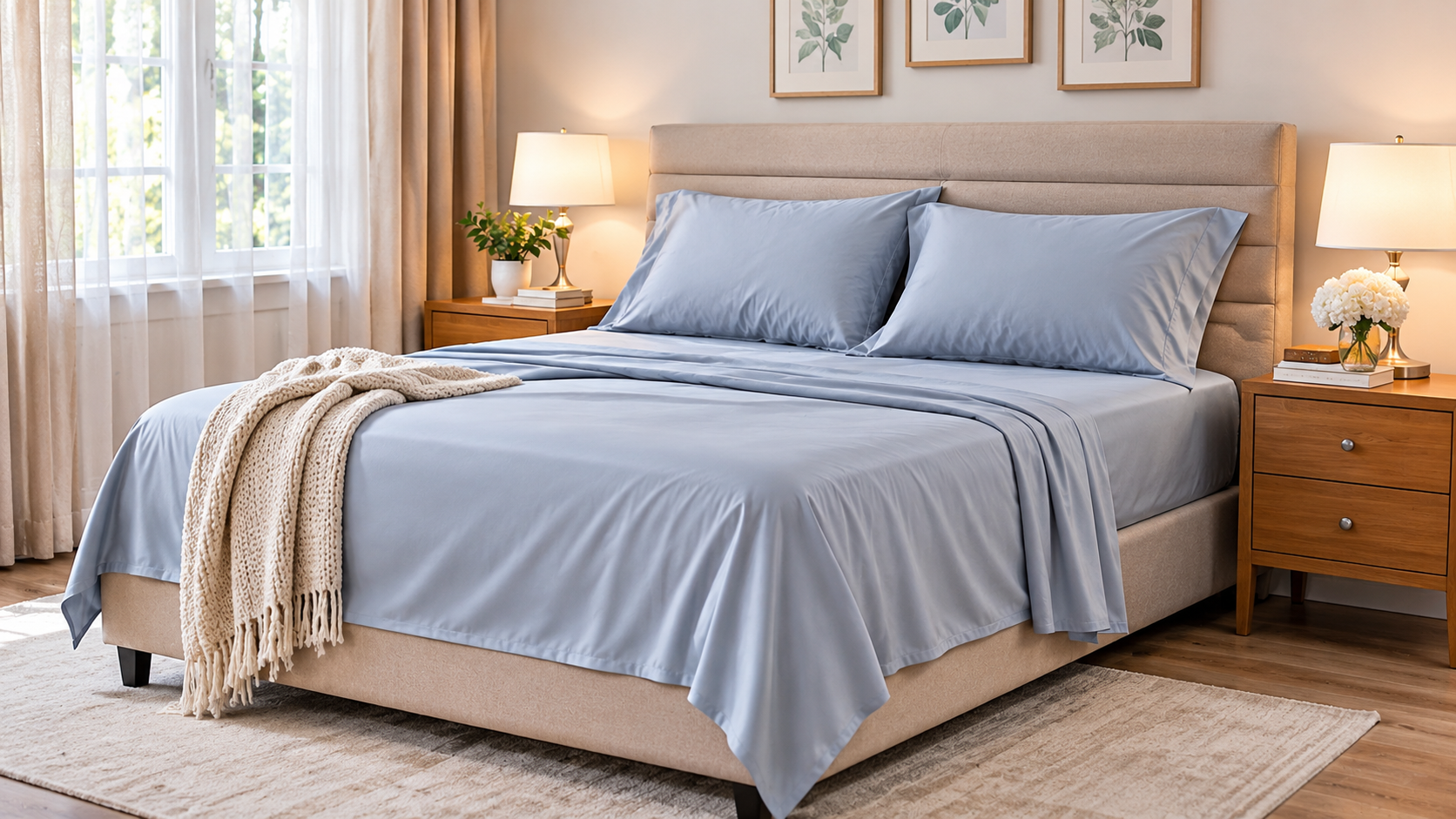
Getting a good night’s sleep often starts with creating a bedroom environment that feels comfortable. While mattresses and pillows receive plenty of attention, Comfortable Bed Sheets can influence how your bedding feels against your skin and how well you manage warmth during the night.
However, choosing the right sheets involves several factors beyond softness. Fabric composition, construction, fit, maintenance, and personal sleeping preferences can all affect your experience.
If you’re planning to replace your current bedding, understanding these details can help you identify sheets that suit your needs without paying extra for features you may not need.
What Makes Comfortable Bed Sheets Worth Buying?
Comfortable Bed Sheets should feel pleasant against your skin, fit your mattress properly, and suit your preferred sleeping temperature. However, comfort is personal. Some people enjoy crisp cotton sheets, while others prefer smooth fabrics with a softer drape.
When comparing the best bed sheets for comfort, pay attention to the following characteristics:
- Fabric composition: Different fibers affect texture, moisture absorption, and maintenance.
- Breathability: Fabric construction influences how easily air passes through the material.
- Surface texture: Some sheets feel crisp, while others have a smooth or slightly brushed finish.
- Mattress compatibility: Properly fitted sheets are less likely to shift or bunch during sleep.
- Cleaning requirements: Practical care instructions make regular maintenance easier.
- Construction quality: Fabric strength, stitching, and elastic quality may affect longevity.
Rather than choosing sheets based entirely on appearance or advertising claims, evaluate how these characteristics match your sleeping habits.
1. Choose the Right Fabric for Your Sleeping Preferences
Fabric selection is one of the first decisions you’ll make when purchasing new bedding. Different materials have distinct textures, care requirements, and temperature-related characteristics.
Cotton Sheets
Cotton remains a common bedding material because it absorbs moisture and is available in different fabric constructions.
If you prefer a familiar, natural-fiber texture, soft cotton bed sheets may be worth examining.
Cotton sheets are commonly available in percale and sateen constructions.
Percale generally has a crisp texture and matte appearance. Sateen tends to feel smoother, with a softer drape and subtle sheen.
The quality of the cotton fibers and manufacturing process can influence how the finished sheets perform.
Linen Sheets
Linen is made from flax fibers and typically has a textured appearance.
It can be a practical choice if you prefer bedding that allows air movement and has a relaxed finish.
However, linen often feels firmer when new compared with certain cotton or lyocell fabrics. Some linen sheets become softer through regular washing and use.
Lyocell Sheets
Lyocell is a manufactured cellulosic fiber commonly produced from wood pulp.
Sheets made with lyocell often have a smooth surface and fluid drape. Their moisture-management characteristics may interest people who prefer a less crisp fabric.
Keep in mind that individual products vary depending on fiber quality, fabric construction, and finishing treatments.
Polyester and Microfiber Sheets
Polyester-based sheets are often selected for their relatively simple maintenance and resistance to wrinkling.
Microfiber sheets can feel soft because they use very fine synthetic fibers.
However, some tightly constructed polyester fabrics may retain warmth compared with lightweight cotton or linen alternatives.
Fabric Comparison Table
| Fabric | Typical Feel | Potential Advantages | Points to Check |
|---|---|---|---|
| Cotton percale | Crisp and smooth | Airflow and classic bedding texture | Wrinkling and initial firmness |
| Cotton sateen | Smooth and silky | Soft drape and polished appearance | Possible heat retention |
| Linen | Textured and relaxed | Air permeability and moisture absorption | Wrinkling and initial texture |
| Lyocell | Smooth and fluid | Moisture management and gentle surface feel | Specific washing instructions |
| Polyester microfiber | Soft and fine-textured | Easy maintenance and wrinkle resistance | Warmth and possible static |
Buying tip: If you have an opportunity to examine a fabric sample, compare its texture directly rather than relying entirely on descriptions such as premium or luxury.
2. Pay Attention to Breathability and Sleeping Temperature
Sleeping temperature can influence how comfortable your bedding feels throughout the night.
If you frequently wake up feeling warm, breathable bed sheets may help you create a sleeping environment that feels less restrictive.
Fabric composition matters, although construction, thickness, room temperature, and other bedding layers can influence the result.
What Should Hot Sleepers Look For?
When researching cooling bed sheets for hot sleepers, focus on measurable material characteristics rather than assuming every product advertised as cooling will perform the same way.
Features worth checking include:
- Lightweight fabric construction
- Air-permeable materials
- Moisture absorption or moisture-management properties
- A texture that feels comfortable against your skin
- Care instructions that preserve the fabric’s intended performance
Cotton percale and linen are common starting points for people who prefer airy bedding.
Some lyocell products may also be suitable, depending on their construction.
However, no sheet material can guarantee that you’ll remain cool throughout the night.
What About People Who Prefer Warm Bedding?
If you often feel cold at night, you may prefer sheets with a smoother, slightly heavier texture.
Cotton sateen, brushed cotton, and certain flannel fabrics may suit this preference.
The surrounding environment still matters. Your blanket, mattress protector, and bedroom temperature can influence how warm your bed feels.
3. Understand Thread Count Before Paying Extra
Thread count is one of the most frequently advertised bedding specifications.
However, a higher number does not automatically indicate better comfort or quality.
What Does Thread Count Mean?
The bed sheet thread count generally describes the number of lengthwise and crosswise threads within one square inch of woven fabric.
Manufacturers sometimes advertise high thread counts as evidence of softness or superior construction.
However, the number alone does not explain fiber quality, fabric strength, or overall comfort.
Independent testing by Consumer Reports has found that sheets with lower advertised thread counts can perform well in softness and durability evaluations.
Does a Higher Thread Count Mean Softer Sheets?
Not necessarily.
Softness can depend on several factors, including:
- Fiber length and quality
- Yarn construction
- Fabric finishing
- Weaving method
- Washing and maintenance
For example, a well-constructed cotton percale sheet with a moderate thread count may feel preferable to a higher-count alternative made with different yarns.
Extremely high advertised counts also deserve attention because some manufacturers count individual plies within yarns differently.
Buying tip: Compare fiber composition and construction first. Treat thread count as one specification rather than the deciding factor.
4. Check Mattress Size and Pocket Depth
Even sheets made from a comfortable fabric can become frustrating if they don’t fit your mattress properly.
Loose sheets may bunch underneath your body, while fitted sheets with insufficient pocket depth can pull away from mattress corners.
Measure Your Mattress Before Buying
Before choosing a sheet set, check three measurements:
- Mattress length: Measure from the head to the foot.
- Mattress width: Measure from one side to the other.
- Mattress height: Measure the total thickness, including any topper that stays on the bed.
Compare these measurements with the manufacturer’s stated dimensions.
If your mattress has a thick pillow top or an additional topper, pay particular attention to the fitted sheet’s pocket depth.
Why Elastic Quality Matters
A fitted sheet usually depends on elastic to remain secure around the mattress.
Check product descriptions for information about elastic placement and pocket construction.
Sheets with elastic around the entire fitted-sheet perimeter may provide a secure fit when properly sized.
However, performance can vary according to the elastic quality and mattress dimensions.
5. Examine Durability and Fabric Construction
When buying bedding, initial softness should not be your only concern.
Durable bed sheets should maintain acceptable fabric strength and fit through regular washing and use.
What Affects Sheet Durability?
Several characteristics can influence how long a sheet set remains comfortable.
Fiber quality: Longer cotton fibers can produce yarns with fewer exposed fiber ends, potentially reducing pilling.
Fabric construction: The density and structure of the fabric can influence its resistance to wear.
Stitching: Secure seams and consistent stitching may help prevent premature separation.
Finishing treatments: Some treatments affect the fabric’s initial feel, although that feel may change after washing.
Care practices: Excessive heat, harsh cleaning methods, and unsuitable washing conditions can contribute to wear.
How Can You Identify Better Construction?
When comparing products, examine available photographs and specifications for:
- Even stitching along hems
- Clearly stated fiber composition
- Consistent fabric texture
- Reinforced or neatly finished seams
- Detailed washing instructions
- Manufacturer information about construction
If independent testing results are available, look for evaluations of shrinkage, strength, pilling, and fit after laundering.
Customer feedback can provide additional context, although individual experiences may vary.
6. Review Washing Instructions and Maintenance Needs
Bed sheets require regular cleaning, so maintenance deserves attention before purchasing.
Some fabrics tolerate machine washing and tumble drying, while others require gentler treatment.
How Should Different Sheet Materials Be Washed?
| Material | General Care Approach | Important Precaution |
|---|---|---|
| Cotton | Machine wash according to label | Excessive heat may cause shrinkage |
| Linen | Follow labeled wash temperature | High heat may increase wear or shrinkage |
| Lyocell | Gentle laundering when recommended | Avoid unsuitable detergents and drying temperatures |
| Polyester microfiber | Machine wash as directed | High heat may damage synthetic fibers |
| Flannel | Follow fabric-specific instructions | Friction and unsuitable washing may encourage pilling |
Always follow the manufacturer’s care label because treatments and fabric construction can affect washing requirements.
How Often Should You Wash Your Sheets?
Many households wash their sheets approximately once a week.
However, your preferred schedule may depend on perspiration, allergies, pets, and personal hygiene needs.
If you prefer frequent washing, look for fabrics with straightforward care instructions and suitable durability characteristics.
Owning an additional sheet set can also make laundry routines easier.
7. Compare Price, Value, and Product Details
Price can influence your purchasing decision, although an expensive sheet set does not automatically provide a better sleeping experience.
Instead of focusing entirely on cost, compare what you’re receiving.
What Should You Check Before Purchasing?
Fabric composition: Confirm the actual fibers used rather than relying on general product descriptions.
Set contents: Check if the package includes a fitted sheet, flat sheet, and pillowcases. Some sets contain fewer pieces.
Dimensions: Confirm compatibility with your mattress and pillows.
Maintenance: Review washing instructions and potential care limitations.
Return conditions: Check the retailer’s policy, especially when purchasing bedding online.
Warranty coverage: Identify any manufacturer warranty and the specific conditions covered.
Is Expensive Bedding Always Better?
Not necessarily.
Some higher-priced sheets use particular cotton varieties, specialized manufacturing methods, or detailed finishing techniques.
However, those characteristics do not guarantee that the fabric will suit your preferences.
A moderately priced cotton percale set may feel better to someone who prefers crisp bedding than an expensive sateen alternative.
Similarly, someone who enjoys smooth, draping fabric may prefer sateen or lyocell.
The practical goal is to identify the characteristics you value and compare products that meet those requirements.
For a closer look at available materials and specifications, you can compare bed sheet styles and fabric options before choosing a set.
Which Bed Sheet Material May Suit Your Sleeping Style?
Your preferred fabric may depend on the temperature of your bedroom, your sensitivity to texture, and how much maintenance you’re comfortable with.
| Your Preference | Material Worth Exploring | Why It May Suit You |
|---|---|---|
| Crisp, freshly washed texture | Cotton percale | Structured feel and good air permeability |
| Smooth, silky surface | Cotton sateen | Soft drape and smooth finish |
| Airy bedding with natural texture | Linen | Breathable construction and relaxed feel |
| Smooth fabric with moisture management | Lyocell | Soft surface and moisture absorption |
| Simple washing and wrinkle resistance | Polyester microfiber | Often straightforward to maintain |
| Warm, cozy bedding | Cotton flannel | Brushed surface and insulating feel |
These are general characteristics rather than guaranteed performance results. Individual products can differ substantially, even when made from the same fiber.
Common Questions About Comfortable Bed Sheets
What Type of Bed Sheets Feels the Softest?
Cotton sateen, lyocell, and certain microfiber fabrics often have smooth surfaces. However, softness depends on construction, finishing, and personal preference.
If you prefer a crisp texture, cotton percale may feel comfortable even though it has a different surface finish.
Are Cotton Sheets Better Than Microfiber Sheets?
Neither material is automatically better for everyone.
Cotton generally absorbs moisture and is available in breathable constructions. Microfiber often provides a fine-textured surface and straightforward maintenance.
Your choice should reflect your temperature preferences, desired texture, and washing habits.
Do Bed Sheets Become Softer After Washing?
Some fabrics, particularly certain cotton and linen products, may soften with repeated laundering.
However, changes depend on the fabric and finishing process. Washing can also cause shrinkage or wear when care instructions aren’t followed.
Are Expensive Sheets Worth Buying?
They may be worthwhile if their material quality, construction, fit, and maintenance characteristics match your priorities.
However, a higher price does not guarantee better comfort or durability.
Comparing product specifications and independent testing results can help you assess value.
How Do You Know When to Replace Bed Sheets?
Replacement may be appropriate when sheets develop persistent thinning, tears, uncomfortable pilling, damaged elastic, or fit problems that interfere with regular use.
There is no universal replacement schedule because laundering frequency, fabric construction, and daily wear vary.
Finding the Right Balance Between Comfort, Quality, and Value
Finding the right bedding becomes easier when you focus on the features that affect your everyday comfort.
Start by identifying your preferred fabric texture. If you enjoy crisp bedding, cotton percale may be a suitable starting point. If you prefer a smooth surface, sateen or lyocell may deserve attention.
Next, evaluate your sleeping temperature. Lightweight fabrics with good air permeability may suit warmer sleeping environments, while brushed or slightly heavier materials may feel preferable in cooler conditions.
Before purchasing, verify the mattress measurements, fiber composition, care instructions, and included pieces.
Finally, compare construction details and independent product evaluations when available. These can provide useful information that advertising descriptions alone may not explain.
The right bed sheets are the ones that fit your mattress, feel comfortable against your skin, and remain practical for your daily routine. Taking time to compare these factors can help you make a purchase that suits your sleeping preferences and household needs.