Choosing the right Linen Bed Sheets can make a noticeable difference in how your bedding feels, looks, and performs throughout the year. Known for their textured surface, moisture absorption, and relaxed appearance, linen sheets are a practical option for people who appreciate natural fabrics.
However, not every linen sheet set feels the same. Fabric composition, weight, finishing methods, and construction can influence softness, breathability, and maintenance requirements.
Before purchasing, understanding these differences can help you identify bedding that suits your comfort preferences, mattress dimensions, and household routine.
1. What Makes Linen Bed Sheets Different From Other Bedding Materials?
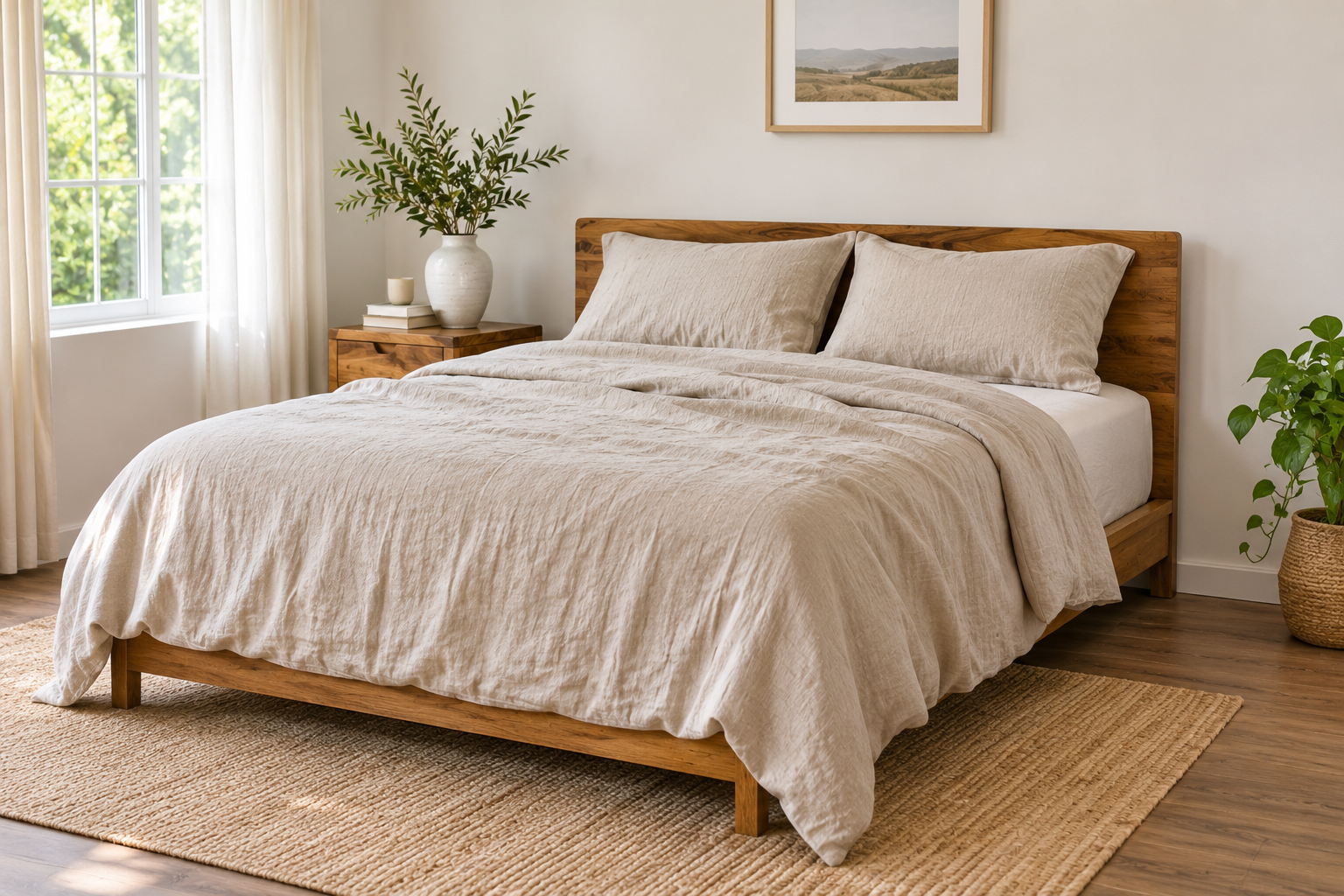
Linen bed sheets are made from fibers obtained from the flax plant. Unlike some synthetic fabrics, linen has a naturally irregular texture that gives bedding a casual, slightly rumpled appearance.
The material is known for its strength, moisture absorption, and airflow. According to the Council of Fashion Designers of America’s fiber guide, flax is a strong natural fiber with useful moisture-handling and drying properties. CFDA+1
One reason people choose breathable linen sheets is their ability to allow air to circulate through the fabric. This can be particularly useful in warm bedrooms or during humid weather.
Key characteristics of linen bedding
- Natural texture: Linen generally has a slightly crisp, textured surface rather than a silky finish.
- Moisture absorption: Flax fibers absorb moisture, which may help bedding feel comfortable in warm conditions.
- Fabric strength: Linen fibers are naturally strong, although finished-sheet durability depends on construction and care.
- Relaxed appearance: Natural creases give linen bedding a casual look.
- Changing softness: Many linen fabrics gradually become softer through regular washing and use.
These characteristics make linen worth evaluating if you prefer bedding with a natural feel and do not require a perfectly smooth surface.
2. Check the Fabric Composition Before Buying
Fabric composition is one of the first details worth examining when shopping for linen bedding.
Products labeled as 100% linen bedding should contain linen fibers throughout the stated fabric components. However, some bedding products combine linen with cotton or other materials to achieve a different texture or price point.
In the United States, the Federal Trade Commission requires covered textile products to disclose their fiber content accurately. Checking the label is therefore a useful way to verify what you are purchasing. Federal Trade Commission+1
Pure linen compared with other fabric compositions
| Fabric type | Typical characteristics | Suitable for |
|---|---|---|
| Pure linen | Textured, breathable, naturally creasing | People who prefer flax-based bedding |
| Linen-cotton fabric | Feel varies according to fiber proportions and construction | People seeking a different texture |
| Pure cotton | Available in smooth, crisp, and soft finishes | People who prefer familiar cotton textures |
| Polyester microfiber | Often smooth and lightweight, with performance depending on construction | People prioritizing easy-care bedding |
Pure linen may suit your preferences if natural flax fibers and their characteristic texture are priorities.
However, fabric composition alone cannot establish which sheet set will feel best. Weave, yarn quality, finishing, and fabric weight all influence the finished product.
3. Evaluate Breathability and Temperature Comfort
Temperature comfort is an important consideration when selecting bedding, especially if your bedroom tends to feel warm.
Linen sheets for hot sleepers are frequently marketed as a breathable bedding option because flax fibers absorb moisture and allow airflow.
Laboratory testing published by the Alliance for European Flax-Linen & Hemp found favorable airflow and moisture-management performance in the linen samples examined. These findings support linen’s potential for comfortable bedding, although results depend on the finished fabric and sleeping conditions. ALLIANCE+1
What affects sleeping temperature?
Several factors influence how cool or warm your sheets feel:
- Fabric weight: A lighter fabric may feel less substantial, although weight alone does not determine airflow.
- Weave construction: Tightly constructed fabrics may behave differently from looser fabrics.
- Bedroom conditions: Humidity, ventilation, and room temperature affect comfort.
- Additional bedding: Comforters, blankets, and mattress protectors influence heat retention.
If you frequently feel warm while sleeping, linen may be worth comparing with other breathable materials.
However, no sheet fabric can guarantee cooler sleep for every person.
4. Understand the Difference Between Regular and Washed Linen
Softness is often a deciding factor when choosing bed sheets.
New linen can initially feel firmer than certain cotton fabrics. This texture may change with washing, although the amount of softening depends on the product.
Washed linen sheets undergo a finishing process intended to soften the material before it reaches the customer.
Regular linen versus prewashed linen
| Feature | Regular linen | Prewashed linen |
|---|---|---|
| Initial texture | May feel firmer or crisper | Usually intended to feel softer initially |
| Appearance | Natural creasing | Often has a relaxed appearance |
| Softness over time | May soften with use | May continue softening |
| Maintenance | Follow manufacturer instructions | Follow manufacturer instructions |
| Buying consideration | Initial texture | Finishing process and fabric quality |
Prewashing does not automatically indicate superior quality. Some manufacturers use different finishing treatments, and the resulting feel can vary.
If immediate softness matters to you, look for detailed product descriptions, fabric samples, or clearly documented return policies.
5. Examine Fabric Weight, Construction, and Durability
When researching durable bed sheets, it is worth examining the actual construction rather than relying entirely on marketing descriptions.
Linen fibers are naturally strong, but a finished sheet can still develop holes, thinning, or seam damage through friction, improper washing, or poor construction.
Fabric weight
Linen fabric weight is commonly expressed in grams per square meter (GSM).
A higher GSM generally indicates greater fabric mass per unit area, although it does not automatically establish better quality.
A lightweight sheet may feel less substantial, while a heavier sheet may provide a denser feel. Your preferred weight depends on personal comfort and seasonal use.
Stitching and finishing
Pay attention to these construction details:
- Even stitching along the edges
- Secure seams without loose threads
- Clearly finished hems
- Consistent fabric texture
- Accurate product dimensions
- Manufacturer care instructions
If possible, inspect close-up product photographs rather than relying entirely on styled bedroom images.
How long can linen sheets last?
There is no universal lifespan for linen sheets. Their longevity depends on fabric construction, washing frequency, mechanical wear, and storage conditions.
Proper maintenance can help preserve their appearance and usability, but no specific number of years should be assumed without supporting product evidence.
6. Compare Linen With Cotton Before Making a Decision
The linen vs cotton sheets comparison is especially helpful if you are deciding between two common natural bedding materials.
Both fabrics can be comfortable for everyday use, but they have different textures and maintenance characteristics.
| Feature | Linen sheets | Cotton sheets |
|---|---|---|
| Fiber source | Flax plant | Cotton plant |
| Texture | Typically textured and slightly crisp | Varies from crisp to smooth |
| Breathability | Generally good | Depends on weave and construction |
| Moisture absorption | Good | Good |
| Wrinkling | Creases readily | Depends on weave and finish |
| Softness | May increase with washing | Depends on fiber and finishing |
| Maintenance | Follow product care label | Follow product care label |
Which fabric should you choose?
Linen may suit you if you prefer textured bedding, natural creases, and a relaxed bedroom appearance.
Cotton may be preferable if you want a wider selection of smooth finishes, including sateen and percale.
Neither fabric is automatically superior. The better purchase depends on your preferred sleeping texture, care routine, and budget.
7. Check Sizing, Maintenance, and Overall Value
Before purchasing, confirm that the sheet dimensions match your mattress and that the required care routine fits your schedule.
Check mattress dimensions
A fitted sheet needs sufficient pocket depth to accommodate the mattress.
If you use a mattress topper or thick mattress protector, include that additional height when checking product dimensions.
Also confirm what the set contains. Some packages include a fitted sheet, flat sheet, and pillowcases, while others contain fewer pieces.
Review the washing instructions
Many linen fabrics can be machine washed, but individual products may have different requirements.
General care practices include:
- Follow the manufacturer’s temperature recommendations.
- Avoid unnecessary exposure to harsh bleaching agents.
- Use the recommended drying setting.
- Avoid excessive heat that could affect the fabric.
- Store clean, fully dry sheets in a ventilated space.
The CFDA fiber guide identifies machine washing as an option for flax textiles, although individual care labels should take priority. CFDA
Evaluate value beyond the purchase price
When comparing sheet sets, examine the complete package rather than focusing on the listed price alone.
Check fabric composition, included pieces, dimensions, care requirements, and return conditions.
A higher price does not necessarily guarantee better construction or comfort.
You can compare linen bedding styles and product details to see how available designs differ in fabric, sizing, and care instructions before deciding.
Frequently Asked Questions About Linen Bed Sheets
Are linen bed sheets comfortable for everyday sleeping?
Yes, linen can be comfortable for everyday use, particularly if you prefer breathable bedding with a textured feel. Comfort remains subjective, and some people prefer smoother fabrics.
Do linen sheets become softer after washing?
Many linen fabrics gradually soften through washing and regular use. However, the degree of softening depends on fiber quality, construction, and finishing.
Are linen bed sheets suitable for all seasons?
Linen can be used throughout the year. Its moisture-handling properties may be helpful in warmer conditions, while blankets and other bedding can provide additional insulation during colder months.
Do linen sheets wrinkle easily?
Yes. Linen naturally creases during washing and use. If you prefer a consistently smooth bed, this characteristic may be a disadvantage.
Are linen sheets difficult to maintain?
Not necessarily. Many products are machine washable, although drying requirements and recommended temperatures vary. Always follow the manufacturer’s instructions.
Are expensive linen sheets always better?
No. Price alone cannot establish fabric quality, softness, or durability. Compare verified specifications, construction, customer return policies, and product details before purchasing.
Making the Right Choice When Buying Linen Bed Sheets
Linen bed sheets may be a suitable purchase if you appreciate breathable natural fabrics, textured bedding, and a relaxed appearance.
Before making your decision, prioritize the characteristics that affect your everyday comfort.