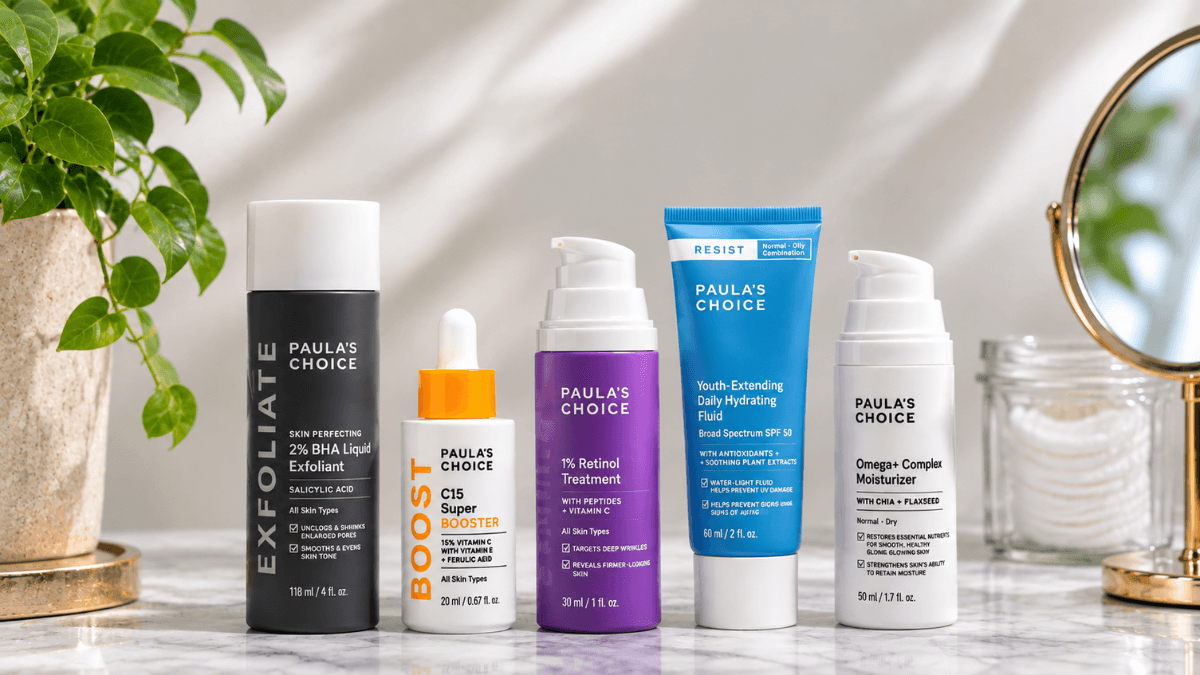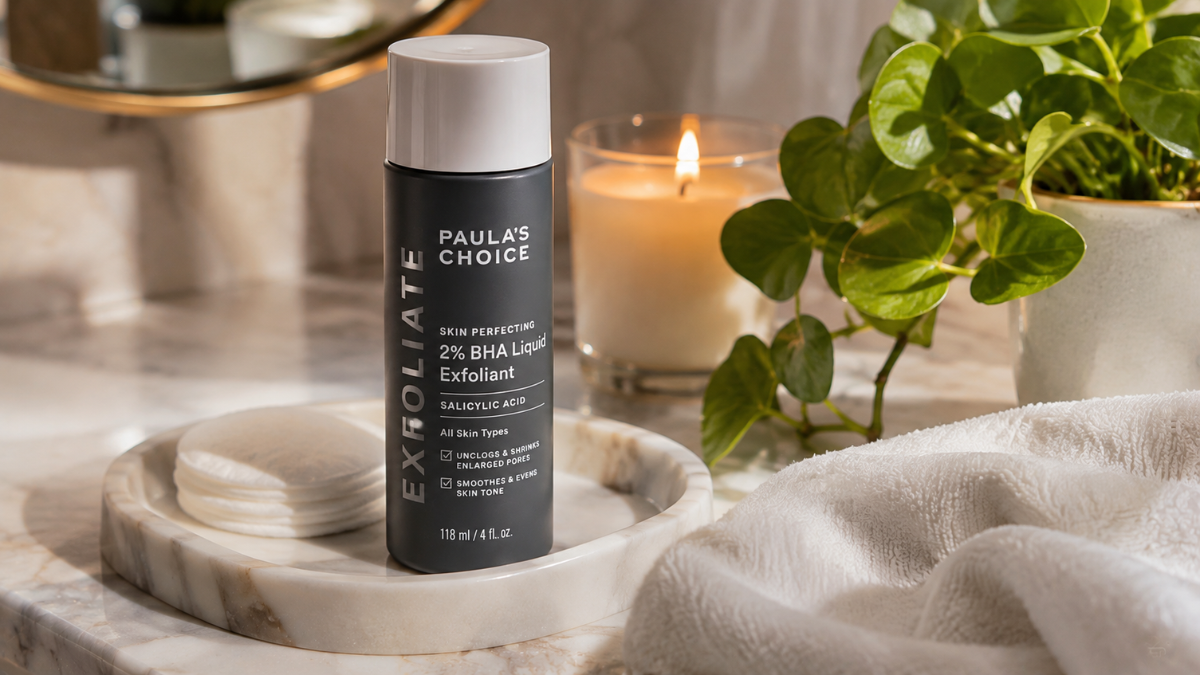
Starting a skincare routine can be confusing, especially when choosing products for blackheads, clogged pores, and uneven skin texture. Paula’s Choice 2% BHA Liquid Exfoliant is a leave-on product containing salicylic acid, an ingredient commonly used to address these concerns.
However, beginners should understand how the formula works, which skin types may benefit, and what side effects to watch for before purchasing.
Here are 9 things worth knowing before adding this exfoliant to your skincare routine.
1. Paula’s Choice 2% BHA Liquid Exfoliant Uses Salicylic Acid to Exfoliate Skin
The main active ingredient is 2% salicylic acid, a beta hydroxy acid (BHA) that helps remove dead skin cells and clear clogged pores.
Unlike facial scrubs that physically remove surface cells through friction, this salicylic acid exfoliant works by loosening accumulated dead skin cells.
Salicylic acid is oil-soluble, which makes it particularly useful for addressing congestion inside oil-filled pores.
According to the American Academy of Dermatology (AAD), salicylic acid is especially effective for blackheads and whiteheads.
What Ingredients Does It Contain?
The manufacturer’s published ingredient list includes the following components:
| Ingredient | Function |
| Salicylic Acid (2%) | Exfoliates dead skin cells and helps clear pores |
| Methylpropanediol | Functions as a solvent and helps deliver ingredients |
| Butylene Glycol | Helps maintain moisture and supports product texture |
| Camellia Oleifera Leaf Extract | Contains antioxidant compounds |
| Sodium Hydroxide | Adjusts the formula’s pH |
| Polysorbate 20 | Helps maintain formula consistency |
Paula’s Choice describes the product as fragrance-free and free from drying alcohols. The company also identifies green tea extract as a supporting ingredient with antioxidant properties.
These details describe the formula, not guaranteed results for individual users.
Because ingredient lists can change, always check the product packaging before use.
2. It May Help With Blackheads and Whiteheads
Blackheads and whiteheads form when oil and dead skin cells accumulate inside hair follicles.
Blackheads remain open at the surface, allowing the trapped material to darken through oxidation. Whiteheads develop when the follicle opening remains closed.
An exfoliant for blackheads containing salicylic acid can help reduce this buildup.
Potential benefits include:
- Helping clear congested pores
- Reducing blackheads and whiteheads
- Improving rough surface texture
- Making pores appear less noticeable when congestion contributes to their appearance
However, the product cannot permanently eliminate blackheads or prevent every breakout.
Can It Make Pores Smaller?
Not permanently.
Genetics, age, oil production, and skin structure influence pore size. Exfoliation may make congested pores look less noticeable, but it cannot permanently change their natural dimensions.
If enlarged pores are your primary concern, evaluate whether excess oil or congestion contributes to their appearance before choosing a product.
3. Beginners Should Know Which Skin Types May Benefit
Not every chemical exfoliant for face care suits every skin type.
Although Paula’s Choice markets this formula for several skincare concerns, individual tolerance varies.
Skin Type Compatibility
| Skin Type | Potential Benefits | Possible Concerns |
| Oily | May help reduce pore congestion | Dryness from frequent use |
| Combination | May help with blackheads in oily areas | Irritation on drier areas |
| Acne-prone | May reduce blackheads and whiteheads | May not adequately treat inflammatory acne |
| Normal | May improve rough texture | Unnecessary exfoliation |
| Dry | May address occasional congestion | Tightness, peeling, and dryness |
| Sensitive | May help if tolerated | Greater likelihood of stinging or redness |
A BHA exfoliant for oily skin may be useful when excess oil contributes to recurring blackheads.
However, oily skin still needs adequate hydration. Excessive exfoliation can cause irritation regardless of how much oil your skin produces.
What If You Have Sensitive Skin?
Sensitive skin requires additional caution.
If you experience frequent redness, burning, or reactions to skincare products, introduce exfoliating acids slowly.
People with eczema, rosacea, or an impaired skin barrier should seek professional guidance before adding potentially irritating ingredients.
4. It Works Differently From Facial Scrubs and Other Exfoliating Acids
Beginners often encounter several exfoliating ingredients without understanding their differences.
The most common categories include beta hydroxy acids (BHAs), alpha hydroxy acids (AHAs), and physical exfoliants.
BHA vs. AHA vs. Physical Scrubs
| Type | How It Works | Common Uses | Possible Drawbacks |
| BHA (Salicylic Acid) | Exfoliates and helps clear oil-filled pores | Blackheads, whiteheads, congestion | Dryness and irritation |
| Glycolic Acid (AHA) | Exfoliates surface skin cells | Rough texture and uneven tone | Stinging and sensitivity |
| Lactic Acid (AHA) | Exfoliates the skin’s surface | Dullness and uneven texture | Possible irritation |
| Physical Scrub | Removes surface cells through friction | Surface exfoliation | Aggressive rubbing may damage skin |
Salicylic acid may be a reasonable choice when clogged pores are your primary concern.
AHAs may be worth evaluating when your main concern involves uneven surface texture rather than blackheads.
Is BHA Better Than AHA?
Neither ingredient category is automatically better.
The appropriate choice depends on your skin concerns, sensitivity, and existing skincare routine.
Using both types simultaneously is not necessary for beginners and may increase irritation.
5. You Should Start Slowly Instead of Using It Every Day
One common beginner mistake is assuming frequent application produces faster results.
Paula’s Choice states that its liquid exfoliant can be used up to twice daily when tolerated. However, the manufacturer’s guidance does not mean everyone needs that frequency.
Starting with fewer applications allows you to observe how your skin responds.
How to Apply the Exfoliant
- Wash your face with a gentle cleanser.
- Pat your skin dry.
- Apply a small amount using clean hands or a cotton round.
- Avoid the immediate eye area and irritated skin.
- Leave the product on without rinsing.
- Apply moisturizer afterward.
- Use broad-spectrum SPF 30 or higher during the day.
For beginners, using the exfoliant 2–3 evenings per week is a cautious starting schedule.
If your skin remains comfortable, you can gradually adjust the frequency.
Should You Apply It Before or After Moisturizer?
The manufacturer recommends applying the liquid after cleansing and before moisturizer.
You do not need to wait for the product to dry completely before continuing your routine.
If your skin becomes irritated, reduce application frequency rather than applying additional exfoliant.
Can You Use It With Retinol?
Salicylic acid and retinol can both irritate skin, particularly when introduced together.
Beginners may find it easier to use these ingredients on separate evenings.
If you already use prescription retinoids, benzoyl peroxide, or another exfoliating treatment, consult your dermatologist before changing your routine.
6. Side Effects Are Possible, Especially When You Overuse It
Even products containing commonly used skincare ingredients can cause unwanted reactions.
Possible side effects include:
- Dryness
- Redness
- Tightness
- Peeling
- Stinging
- Burning
- Increased sensitivity
These symptoms may become noticeable when you apply too much product or combine several irritating treatments.
The AAD advises adjusting exfoliation according to your skin type and existing skincare products.
Is Skin Purging Normal?
Some people experience changes in breakouts after introducing exfoliating acids.
However, not every new breakout is evidence of skin purging.
Irritation, ordinary acne fluctuations, and reactions to other products can produce similar symptoms.
If you experience persistent redness, painful breakouts, or significant discomfort, discontinue use and seek professional advice.
What Should You Do If Your Skin Becomes Irritated?
Stop applying the exfoliant until your skin recovers.
Use a gentle cleanser and moisturizer, avoid additional exfoliating treatments, and protect your skin from sun exposure.
Seek medical advice if symptoms are severe or do not improve.
If you have a known salicylate allergy, consult a healthcare professional before using products containing salicylic acid.
7. Results Can Take Time and Depend on Your Skin
One important question beginners ask is how quickly they should expect visible improvements.
Paula’s Choice advertises relatively fast improvements in skin smoothness and appearance. These are manufacturer claims based on its cited testing and should not be interpreted as guaranteed outcomes.
Improvement in blackheads and recurring congestion may take several weeks.
What Results Can You Reasonably Expect?
| Skin Concern | Potential Improvement | Important Limitation |
| Blackheads | Reduced buildup inside pores | Blackheads can return |
| Whiteheads | Fewer clogged follicles | Results vary |
| Rough texture | Smoother-feeling skin | Irritation may interfere with progress |
| Enlarged-looking pores | Less noticeable congestion | Natural pore size remains unchanged |
| Inflammatory acne | Limited improvement for some users | Other treatments may be needed |
| Deep acne scars | Little expected improvement | Professional treatment may be necessary |
The AAD advises allowing approximately 6–8 weeks to assess initial improvement from acne treatments.
That timeline is general dermatology guidance, not a guarantee for this particular product.
Can It Remove Acne Scars?
Salicylic acid may improve some superficial texture concerns, but it cannot reliably remove deep or pitted acne scars.
Indented scars often require dermatologist-directed treatments.
If scarring is your primary concern, an exfoliating liquid may not be the most appropriate purchase.
8. You Should Compare It With Other Exfoliating Products Before Buying
Paula’s Choice has several exfoliating products, and its 2% BHA Liquid is not the only option available.
Choosing between products requires examining the active ingredients, formula texture, and intended use.
How Does It Compare With Other Options?
| Product Type | Main Characteristics | Who May Prefer It |
| Paula’s Choice 2% BHA Liquid | Leave-on liquid containing 2% salicylic acid | People targeting recurring pore congestion |
| Salicylic Acid Cleanser | Rinse-off cleanser containing salicylic acid | People preferring a wash-off product |
| AHA Exfoliating Serum | Uses ingredients such as glycolic or lactic acid | People primarily concerned with surface texture |
| Gentle Non-Exfoliating Cleanser | Cleans skin without exfoliating acids | People with easily irritated skin |
| Physical Facial Scrub | Removes surface cells through friction | People who tolerate gentle mechanical exfoliation |
Is a Leave-On Exfoliant Better Than a Cleanser?
Not necessarily.
A leave-on formula remains in contact with the skin, while a cleanser is rinsed away.
However, longer contact does not automatically mean a product will produce better results for everyone.
A salicylic acid cleanser may be sufficient if you experience occasional blackheads or prefer fewer leave-on active products.
Does the Product’s Price Make It Worth Buying?
Price alone cannot establish effectiveness.
When comparing products, check:
- Active ingredient concentration
- Product size
- Application frequency
- Ingredient compatibility
- Cost per fluid ounce
- Your existing skincare routine
A less expensive product with a suitable formula may address your concerns adequately.
Likewise, purchasing an additional exfoliant may be unnecessary if your current skincare products already contain salicylic acid.
9. Check the Product Details Before Making Your First Purchase
A suitable clogged pores treatment should address your concerns without creating unnecessary irritation.
Before purchasing, review the formula, product size, seller, and your current skincare routine.
Product Details at a Glance
| Feature | Product Information |
| Brand | Paula’s Choice |
| Product Name | Skin Perfecting 2% BHA Liquid Exfoliant |
| Active Exfoliating Ingredient | 2% Salicylic Acid |
| Exfoliant Category | Beta Hydroxy Acid |
| Formula | Leave-on liquid |
| Fragrance | Fragrance-free, according to the manufacturer |
| Available Formats | Full-size liquid, travel-size liquid, and pads listed by the manufacturer |
| Application | After cleansing, before moisturizer |
| Rinsing Required | No |
| Main Concerns | Blackheads, whiteheads, and pore congestion |
Who Should Think About Buying It?
The product may be relevant if you:
- Experience recurring blackheads or whiteheads
- Have oily or combination skin with congested pores
- Prefer leave-on exfoliating products
- Want to address rough texture associated with dead skin buildup
- Can introduce an exfoliating ingredient gradually
Who Might Want to Skip It?
You may want to choose another product if:
- Your skin is currently irritated or damaged
- You already use another salicylic acid treatment
- Your main concern is deep acne scarring
- You frequently react to exfoliating acids
- Your existing skincare routine adequately addresses your concerns
For a balanced Paula’s Choice BHA review, the product’s limitations deserve attention alongside its potential benefits.
Before purchasing, you can check the current ingredients, sizes, and product details on the official Paula’s Choice website.
How to Decide if This Exfoliant Belongs in Your Routine
Paula’s Choice 2% BHA Liquid Exfoliant contains an established exfoliating ingredient that may help address blackheads, whiteheads, and pore congestion.
Its leave-on formula may suit people who want targeted exfoliation, but frequent application can cause dryness and irritation.
Before buying, identify your main skin concern, check the ingredients in your existing products, and determine if another exfoliating treatment is necessary.
If you already have a comfortable skincare routine and rarely experience clogged pores, adding this product may provide limited benefit.
If blackheads and recurring congestion remain concerns, a carefully introduced salicylic acid product may be worth evaluating.
For beginners, the most sensible approach is to prioritize skin tolerance, gradual application, and realistic expectations rather than immediate results.