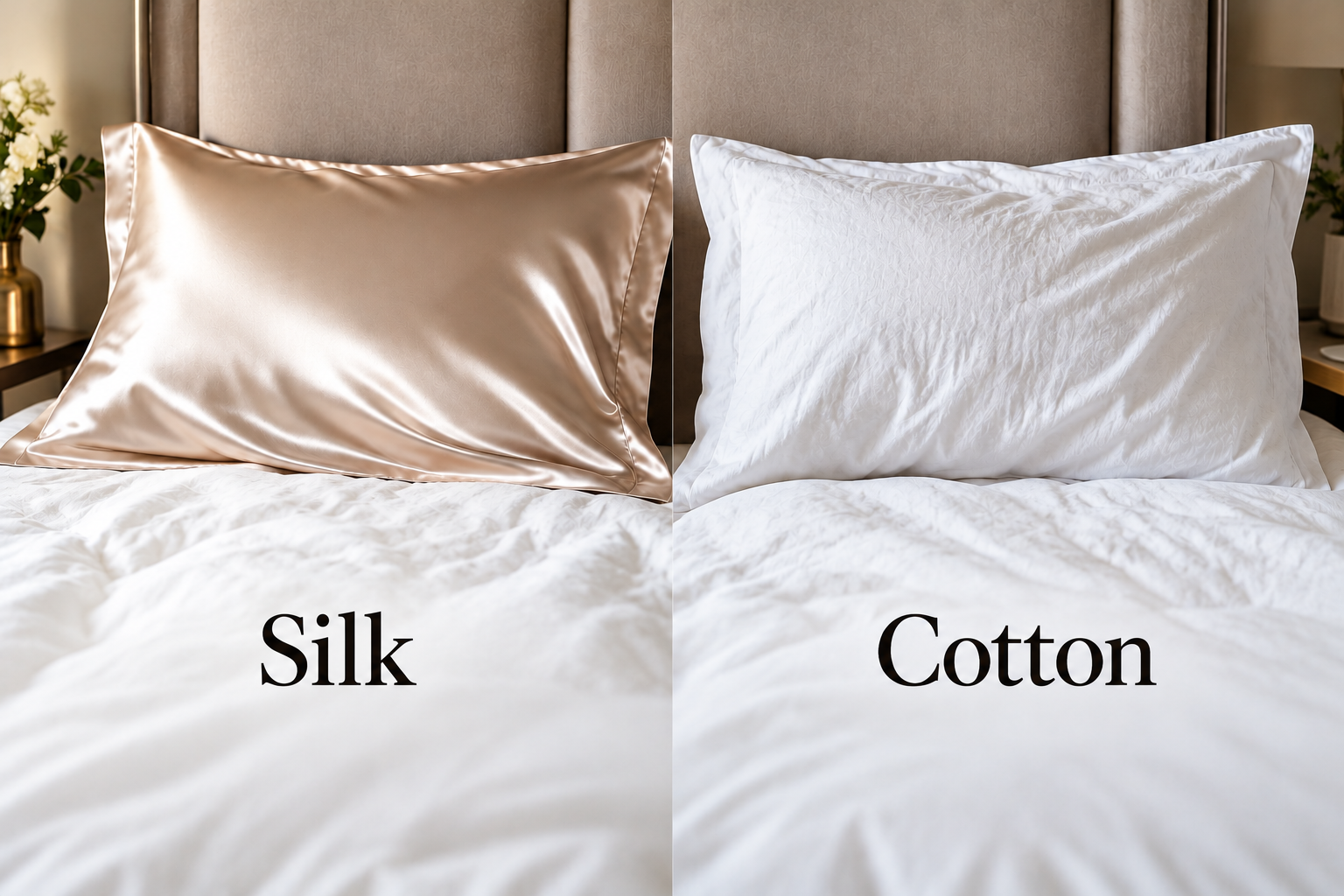
Two popular options are silk and cotton, but their materials, textures, prices, and maintenance requirements differ.
When comparing a silk vs cotton pillowcase, you may notice that silk is often associated with a smooth, luxurious feel, while cotton is valued for its practicality, comfort, and accessibility.
So, which fabric deserves a place on your bed?
This guide compares their characteristics, potential advantages, typical prices, and care requirements to help you select a pillowcase that suits your preferences and budget.
Silk vs Cotton Pillowcase: What Are the Main Differences?
Silk and cotton are natural fibers, but they come from different sources and have different physical characteristics.
Silk is a protein-based fiber produced by silkworms. Cotton is a plant-based cellulose fiber obtained from cotton plants.
Both can be comfortable for sleeping, although their performance depends on fiber quality, fabric construction, finishing treatments, and laundering.
Key Features Compared
| Feature | Silk Pillowcase | Cotton Pillowcase |
|---|---|---|
| Material | Natural protein fiber | Natural plant fiber |
| Texture | Typically smooth and slippery | Soft, crisp, or textured |
| Hair friction | Generally lower with smooth silk surfaces | Depends on weave and finish |
| Moisture handling | Absorbs some moisture | Highly absorbent |
| Breathability | Depends on fabric construction | Depends on fabric construction |
| Maintenance | Often requires delicate washing | Usually machine washable |
| Durability | Sensitive to abrasion and harsh detergents | Generally withstands frequent washing |
| Price | Typically higher | Available across many price ranges |
| Ideal buyer | Someone prioritizing smoothness and a gentle surface | Someone prioritizing convenience and easy maintenance |
Neither material automatically guarantees better sleep, healthier skin, or improved hair condition.
The right choice depends on what matters to you.
What Are the Benefits of Sleeping on a Silk Pillowcase?
Many shoppers research silk pillowcase benefits because silk has a smooth surface that can feel gentle against the face and hair.
However, some advertised advantages have stronger supporting evidence than others.
1. A Smooth Surface That Reduces Friction
Silk fabric typically creates less resistance against hair than rougher cotton fabrics.
This may help reduce friction-related tangling, particularly if your hair is curly, textured, dry, or prone to breakage.
However, hair results vary depending on the fabric’s quality, your hair condition, and your sleeping habits.
2. Comfortable Contact With Facial Skin
A smooth silk surface may feel pleasant against sensitive facial skin.
Some people prefer silk because it produces less noticeable pulling during movement.
Still, there is limited clinical evidence showing that ordinary silk pillowcases prevent wrinkles, treat acne, or reverse visible skin aging.
3. Lightweight and Comfortable Fabric
Silk can feel lightweight and comfortable against your face.
Its temperature performance depends on the weave, fabric weight, room conditions, and your bedding.
Silk should not automatically be described as cooling because individual experiences can differ.
4. A Premium Appearance
Silk pillowcases commonly have a soft sheen and smooth drape.
They may suit bedrooms where fabric appearance and tactile comfort influence purchasing decisions.
What Are the Benefits of Cotton Pillowcases?
Understanding cotton pillowcase benefits can help you decide if paying extra for silk is necessary.
Cotton remains a practical bedding material because it is widely available, washable, and produced in different fabric constructions.
1. Easy Cleaning and Maintenance
Many cotton pillowcases can be machine washed using ordinary laundry settings, subject to their care labels.
This makes cotton convenient if you prefer frequently washing your bedding.
Cotton is especially practical for households that prioritize simple maintenance.
2. Several Fabric Textures
Cotton pillowcases are available in different constructions.
Cotton percale generally has a crisp feel and a matte finish.
Cotton sateen typically feels smoother and has a subtle sheen.
Cotton jersey has a soft, flexible, T-shirt-like texture.
These differences can affect comfort significantly, even though all three fabrics contain cotton.
3. Good Moisture Absorption
Cotton readily absorbs moisture, which can be helpful when bedding becomes damp.
However, moisture absorption and moisture release are different properties.
Cotton can retain moisture, so it may feel damp under certain sleeping conditions.
4. Accessible Pricing
Cotton pillowcases are sold across budget, midrange, and premium categories.
You can often purchase a cotton pillowcase for less than a comparable genuine silk product.
High-quality cotton, however, can cost considerably above entry-level alternatives.
Silk Pillowcase vs Cotton for Hair: Which Fabric Should You Choose?
When comparing a silk pillowcase vs cotton for hair, friction is one of the main factors to examine.
Hair moves against the pillowcase as you change sleeping positions. A smoother surface can reduce resistance during that movement.
Silk for Curly, Dry, or Fragile Hair
Silk may be worth trying if your hair tangles easily or experiences friction-related damage.
Its smooth surface may help reduce mechanical stress during sleep.
However, a silk pillowcase cannot repair existing hair damage or replace appropriate hair care.
Cotton for Everyday Hair Care
Cotton is suitable for many hair types, especially when comfort, affordability, and cleaning convenience are your priorities.
A smooth cotton sateen pillowcase may feel gentler than a rough or heavily textured cotton fabric.
The quality of the specific pillowcase matters as much as its fiber category.
What About Satin Pillowcases?
Satin refers to a fabric weave rather than a particular fiber.
A satin pillowcase may be made from polyester, silk, or another material.
Polyester satin can provide a smooth sleeping surface at a lower purchase price than genuine silk.
However, its moisture management, breathability, and laundering characteristics may differ.
Which Is the Best Pillowcase for Hair and Skin?
The best pillowcase for hair and skin depends on your priorities rather than a single universal recommendation.
Choose Silk If You Want:
- A smooth fabric surface that produces relatively little friction.
- A soft, slippery texture against your face and hair.
- A premium fabric appearance.
- A pillowcase that may help reduce friction-related tangling.
- A bedding accessory you are comfortable caring for delicately.
Choose Cotton If You Want:
- A pillowcase that is generally easier to wash.
- Several fabric textures and finishes.
- A wider selection of affordable products.
- Bedding suitable for frequent laundering.
- A familiar, soft fabric that can withstand regular household use.
If you have acne, eczema, or another skin condition, choosing a pillowcase should complement appropriate skin care rather than replace medical treatment.
What Should You Know About Mulberry Silk Pillowcases?
A mulberry silk pillowcase is commonly made using silk produced by silkworms fed on mulberry leaves.
Mulberry silk is frequently used in premium bedding, although the name alone does not establish a product’s overall quality.
When evaluating silk pillowcases, examine several characteristics.
Silk Weight and Momme Rating
Momme is a traditional measurement of silk fabric weight.
Pillowcases are commonly marketed in weights such as 19, 22, and 25 momme.
A higher momme value generally indicates a heavier silk fabric when other construction factors are comparable.
However, higher momme does not automatically mean better comfort or longer product life.
Fabric quality, stitching, finishing, and washing practices also matter.
Fabric Composition
Check that the product description specifies genuine silk if that is what you intend to purchase.
Some products described as silky or satin are made from synthetic fibers.
A label stating 100% silk provides a clearer indication of fiber composition than marketing descriptions such as silk-like.
Closure Design
Silk pillowcases may feature envelope closures, hidden zippers, or open ends.
An envelope closure keeps the design simple, while a hidden zipper may help keep the pillow securely inside.
Your preferred design depends on convenience and comfort.
Silk vs Cotton Pillowcase Prices: How Much Should You Spend?
Silk pillowcases generally cost above basic cotton alternatives because silk production and processing differ from cotton manufacturing.
However, retail prices vary according to size, construction, fabric quality, brand, and seller.
The following dollar amounts are illustrative shopping budgets, not verified current retailer quotations.
| Pillowcase Type | Illustrative Budget (USD) |
|---|---|
| Basic cotton pillowcase | $5–$15 |
| Cotton percale or sateen pillowcase | $10–$30 |
| Premium cotton pillowcase | $25–$60+ |
| Entry-level genuine silk pillowcase | $20–$45 |
| Premium silk pillowcase | $45–$100+ |
These ranges should be used for preliminary budgeting rather than as confirmed market prices.
Before purchasing, check if the advertised price covers one pillowcase or a pair.
Is an Expensive Silk Pillowcase Worth Buying?
A higher price may be reasonable if you strongly prefer silk’s smooth texture and plan to use it regularly.
However, paying extra does not guarantee noticeable improvements in your hair or skin.
A well-made cotton sateen pillowcase may provide sufficient comfort if you are primarily interested in a soft sleeping surface.
Your budget should reflect your preferences, not unsupported beauty claims.
Which Pillowcase Material Is Better for Hot Sleepers?
When comparing breathable pillowcase materials, pay attention to fabric construction rather than relying entirely on fiber names.
Both silk and cotton can permit airflow, but their performance depends on fabric density, weave, weight, and environmental conditions.
Silk and Temperature Comfort
Silk can feel cool when you first touch it because of its surface characteristics.
However, the sensation may change as the fabric adjusts to your body temperature.
A silk pillowcase should not be expected to maintain a consistently cold surface throughout the night.
Cotton and Temperature Comfort
Lightweight cotton percale is frequently chosen by people who prefer a crisp, airy fabric.
Cotton sateen may feel smoother and somewhat warmer depending on its construction.
If you sleep hot, compare fabric weight, weave, and your bedroom temperature before buying.
How Do You Wash and Maintain Silk and Cotton Pillowcases?
Care requirements can affect the total value of your purchase.
Caring for Silk Pillowcases
Always follow the manufacturer’s instructions.
Common recommendations include:
- Washing with a detergent suitable for silk.
- Using cool water and a delicate cycle when machine washing is permitted.
- Avoiding chlorine bleach.
- Placing the pillowcase inside a mesh laundry bag.
- Air-drying away from direct sunlight when recommended.
Some silk pillowcases require hand washing or professional cleaning.
Caring for Cotton Pillowcases
Cotton pillowcases generally require less specialized maintenance.
Depending on the care label, you may be able to:
- Machine wash using an appropriate temperature.
- Use ordinary laundry detergent.
- Tumble dry at a recommended heat setting.
- Iron when necessary.
Some cotton fabrics may shrink, fade, or wrinkle, particularly if washed or dried incorrectly.
What Should You Check Before Buying a Pillowcase?
A thoughtful purchase involves looking beyond the material name.
1. Check the Fiber Label
Verify if the product is genuine silk, pure cotton, or a fabric containing multiple fibers.
This can prevent confusion between silk and polyester satin.
2. Choose the Correct Size
Check the dimensions of your pillow and compare them with the pillowcase measurements.
Standard, queen, and king labels can vary between manufacturers and markets.
3. Examine Fabric Construction
For silk, review the momme weight and construction details.
For cotton, check the weave, fabric feel, and finishing information.
Thread count alone is not a reliable measure of overall cotton fabric quality.
4. Review Cleaning Instructions
A pillowcase that requires special care may be inconvenient if you prefer uncomplicated laundry routines.
Choose a fabric you can maintain consistently.
5. Compare Total Purchase Costs
Review the number of pillowcases included, delivery fees, return conditions, and any applicable taxes.
A lower advertised price may not represent the lowest total cost.
6. Evaluate Product Descriptions Carefully
Claims about wrinkle prevention, acne treatment, or guaranteed hair improvements deserve scrutiny.
Prioritize clearly stated fabric specifications and practical product information.
You can compare current silk and cotton pillowcase prices and available styles to see which material, size, and construction fit your budget.
Frequently Asked Questions
Is Silk Better Than Cotton for Your Face?
Silk generally has a smoother surface than many cotton fabrics, which may reduce friction against your face.
However, there is insufficient evidence to conclude that an ordinary silk pillowcase prevents facial wrinkles or treats skin conditions.
Does Silk Prevent Hair Breakage?
Silk may help limit friction-related tangling and mechanical stress.
It cannot guarantee that your hair will stop breaking, since hair health depends on several factors.
Is Cotton Better for Sensitive Skin?
Cotton can be comfortable for sensitive skin, especially when the fabric is soft, clean, and free from irritating finishes.
Silk may also feel comfortable. Individual sensitivity, detergents, dyes, and fabric treatments can influence reactions.
Can You Sleep on a Silk Pillowcase Every Night?
Yes. Genuine silk pillowcases are intended for regular bedding use, provided they are cleaned and maintained according to their care instructions.
Is Silk Cooler Than Cotton?
Neither fabric is consistently cooler under every condition.
Fabric weight, weave, moisture handling, room temperature, and individual preferences influence sleeping comfort.
How Often Should You Replace a Pillowcase?
There is no universal replacement schedule.
Replace your pillowcase when it becomes damaged, excessively worn, or difficult to clean effectively.
Regular washing helps maintain cleanliness between replacements.
Which Pillowcase Is the Right Purchase for Your Sleeping Habits?
Choosing between silk and cotton comes down to comfort, maintenance, and how much you want to spend.
Silk may be the better purchase if you prioritize a smooth sleeping surface, reduced fabric friction, and a premium feel. It can be particularly attractive if your hair tangles easily and you are willing to follow delicate washing instructions.
Cotton may be the better purchase if you want reliable everyday bedding, straightforward cleaning, and several affordable fabric options.
If you are undecided, a smooth cotton sateen pillowcase is a practical starting point. If you specifically want the feel of genuine silk, review fiber composition, momme weight, care instructions, and the total price before purchasing.
The right pillowcase is one that feels comfortable, fits your pillow properly, and suits the way you care for your bedding.